

Patience: Embracing the Tortoise
03.29.23 | 55105

For reflection:
Sometimes, we are waiting for momentous news or dramatic change. Describe a time when you had to be patient for a moment like this.
Sometimes, we are patient in the interest of seeing slow, incremental change over time. Describe a time you had to be patient to see change like this.
How do small shifts and practices allow us to see larger changes over time? What small shifts have you seen in our society in your recent memory?
What small habits have you implemented in your life? How have those habits changed you over time?
One of my favorite stories as a young person was that of the tortoise and the hare. Many of us probably know the general arc of the story: a tortoise and a hare start a race together, and the hare bounds away quickly, while the tortoise begins with small, steady steps. The hare, realizing how far ahead they are, stops to take breaks along the way, thinking there’s no chance the tortoise will ever catch up. But the tortoise’s small steps are reliable. They are consistent. And without the hare’s realization, eventually the tortoise catches up - and wins the race.
This may have been one of the earliest stories I was told as a child, but it is also one whose lesson I’m not sure I have yet fully grasped. In this seemingly simple children’s story lies a truth about human nature that our busy society tends to ignore - that consistent, incremental movement will win the day.
Recently, I have been working to greet and embrace the mindset of the tortoise - especially in my work. As I have discussed previously on The Zip Code Project, I currently work in affordable housing. Particularly, I help lift up the voices and stories of individuals with lived experience of homelessness and housing instability. This especially means helping our residents share their experiences with lawmakers at the state and local level.
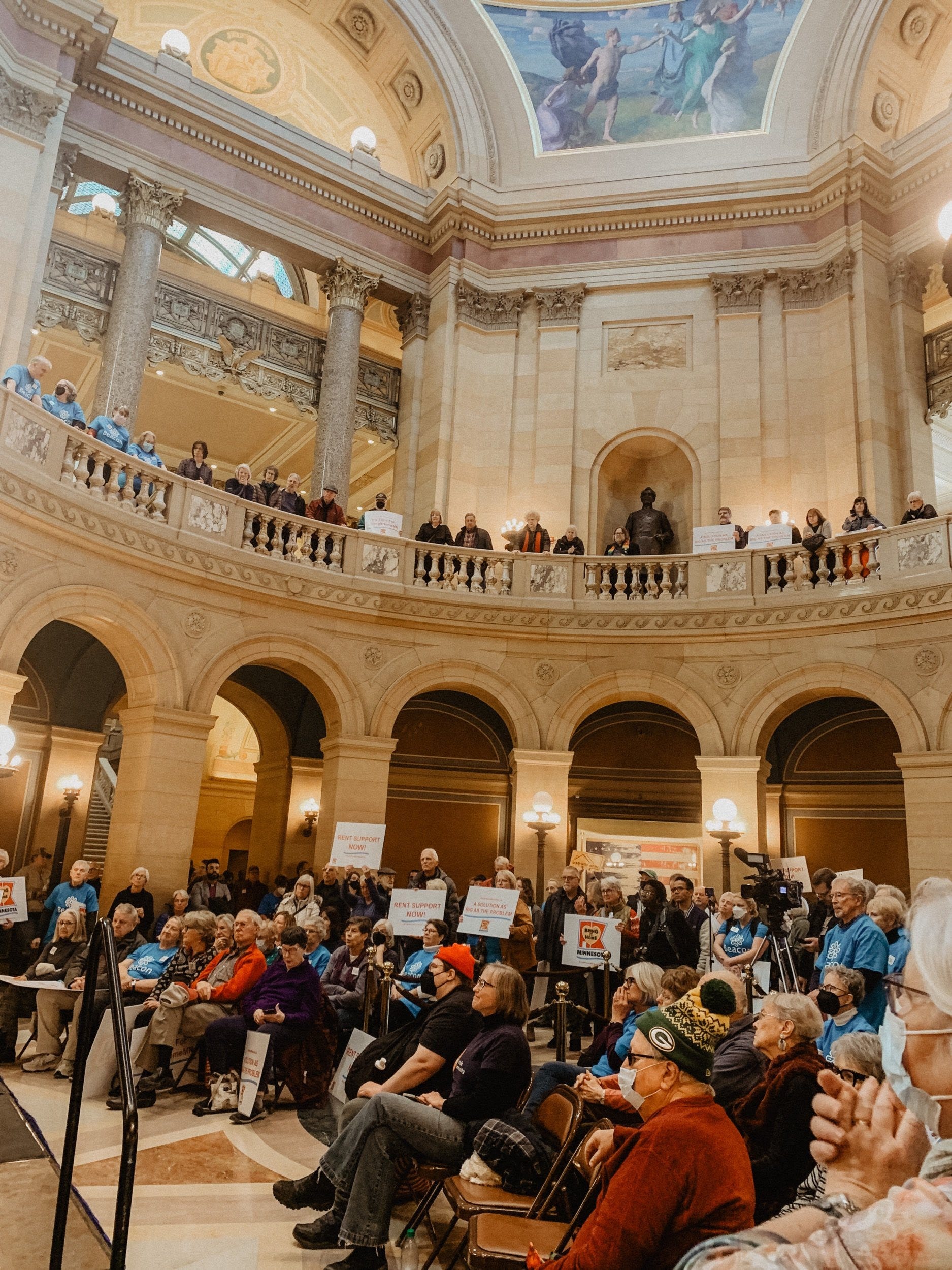
Being around capitol hill is, perhaps not surprisingly, always a little intimidating. But most of the time, it is slow. Most of the time, working in political and community organizing and advocacy looks more like the tortoise’s race than that of the hare. It appears as the slow and steady dedication of community members and elected officials who come together and do their best to affect change.
So, in considering patience this month, I have been wondering: how do we embrace and work with, rather than against, the reality that most change happens incrementally, rather than all at once?
In Minnesota recently, both bodies of the legislature passed, and the governor signed into law, the Driver’s Licenses for All bill. The day the bill passed became a huge day of celebration for many Minnesotans and advocates, and the press covered the momentous event like never before. But that bill was first introduced in 2011. It took twelve years of advocacy, conversation, and culture change to bring that bill around to law. It is an extraordinary feat - and it should be a reminder for us what is needed to make change that is long-lasting. It reminds me that, most of the time, we need to be the tortoise - so that every so often, when it matters most, we can be the hare.
Looking at the Driver’s Licenses for All bill as a model of advocacy in this state, I am reminded that we must look to role models who have come before us, who have laid the path we now walk. Part of how we do this is by realizing that we inherited the change it took to bring us where we are now - that the people who came before us did the hard work and had the difficult conversations to bring us one step closer to our goal. Someone came before us to advocate for those incremental changes, and it is now our turn to pick up the torch and walk the path ahead.
Perhaps that is part of the lesson, too. It is important we remember that most of the time, it is a walk. Most of the time, it is a steady pace and commitment, more than it is a sprint. At some point, and for some changes, it becomes a sprint - a sprint across the finish line. But it can’t always be one, if we are to have stamina for the rest of the journey.
What goals are you working toward? How do those goals contribute to other, larger goals for your community? Whose footsteps are you following in? And, conversely, how are you making the journey your own?
Until next time, friends.