

Vocation: The People Who Listen, Even When You're Not Saying Much
02.10.2024 | 29205

For Reflection:
Does your work (i.e., the way you make a living) feel like your vocation? Why or why not?
What are you skilled at? What are you passionate about?
What do you spend the majority of your time doing? Do you believe this connects to
Who in your life is fulfilling their vocation? What qualities do you see that make you think so?
Who is a mentor for you? In which areas of your life do you hope to emulate them?
What aspects of your current work feel aligned with your skills and/or passions?
Who has supported you in pursuing your passions?
I can distinctly recall the moment I decided to switch my major. In the spring semester of my first year of college, I found myself in a series of conversations with friends and acquaintances who repeatedly suggested I should consider a Religious Studies minor. Just because you want to go to law school doesn’t mean you can’t have a fun minor, they suggested. It might actually be advantageous to have something different on your CV.
They have a point, I thought, anxious to please. This would be a fun minor, a fun way to take some interesting courses. Maybe they will make me more interesting, too, I silently hoped.
**Cue my panic when at the end of my first year of college I declared not a Religious Studies minor, but a Religious Studies major (I did this intentionally, yet still panicked). I anxiously asked one of my professors for his advice — would I be able to find a job after graduation? Would these classes develop skills I would need for the “real world”? Would he be willing to become my advisor? I wasn’t saying much, but these simple questions pointed toward vast areas of concern for my future. Really, I wanted to know whether he would guide me and be there for me in this new academic journey. I wanted reassurance that I would, in fact, learn and grow in ways that would appeal to future employers. And, truthfully, I wanted someone to confirm that I wouldn’t regret this decision.
The rest was history, so to speak. The classes laid out before me, I found myself excited by the possibility of studying a variety of religious traditions, with professors who came so well regarded I couldn’t possibly believe I would live up to their expectations.
In the moment, I didn’t realize that I was not, actually, choosing something “fun” or something I hoped would make me more “interesting.” I was, in fact, choosing something that deeply resonated with the internal questioning I had experienced for the past several years. Throughout middle and high school, I had willingly participated in the religious rituals of my familial line. I attended Catholic mass, completed my confirmation, and went on week-long service trips around the United States. And yet, through it all I held questions and conflicts that rang unbearably loudly inside my head.
Today, I’m not sure that I would claim whole-heartedly that the work I do (i.e., the way I make a living) fits entirely within the category of a vocation. Perhaps, I’d even admit that the path I originally thought I wanted my life to take - to attend law school and become an immigration lawyer - may have come closer to the idea of a vocation. On that path, I hoped to grow more and more skilled at a particular career which would match one of my deepest passions. But I’m not sure that I would have understood why I felt so passionate about immigrant rights had I followed that original plan. In choosing to diverge from what seemed like a clear-cut set of steps toward a clear-cut goal, I allowed myself the space to identify my true skills and passions. And now, I am seeking out and choosing jobs that relate to these aspects of who I am as a person.
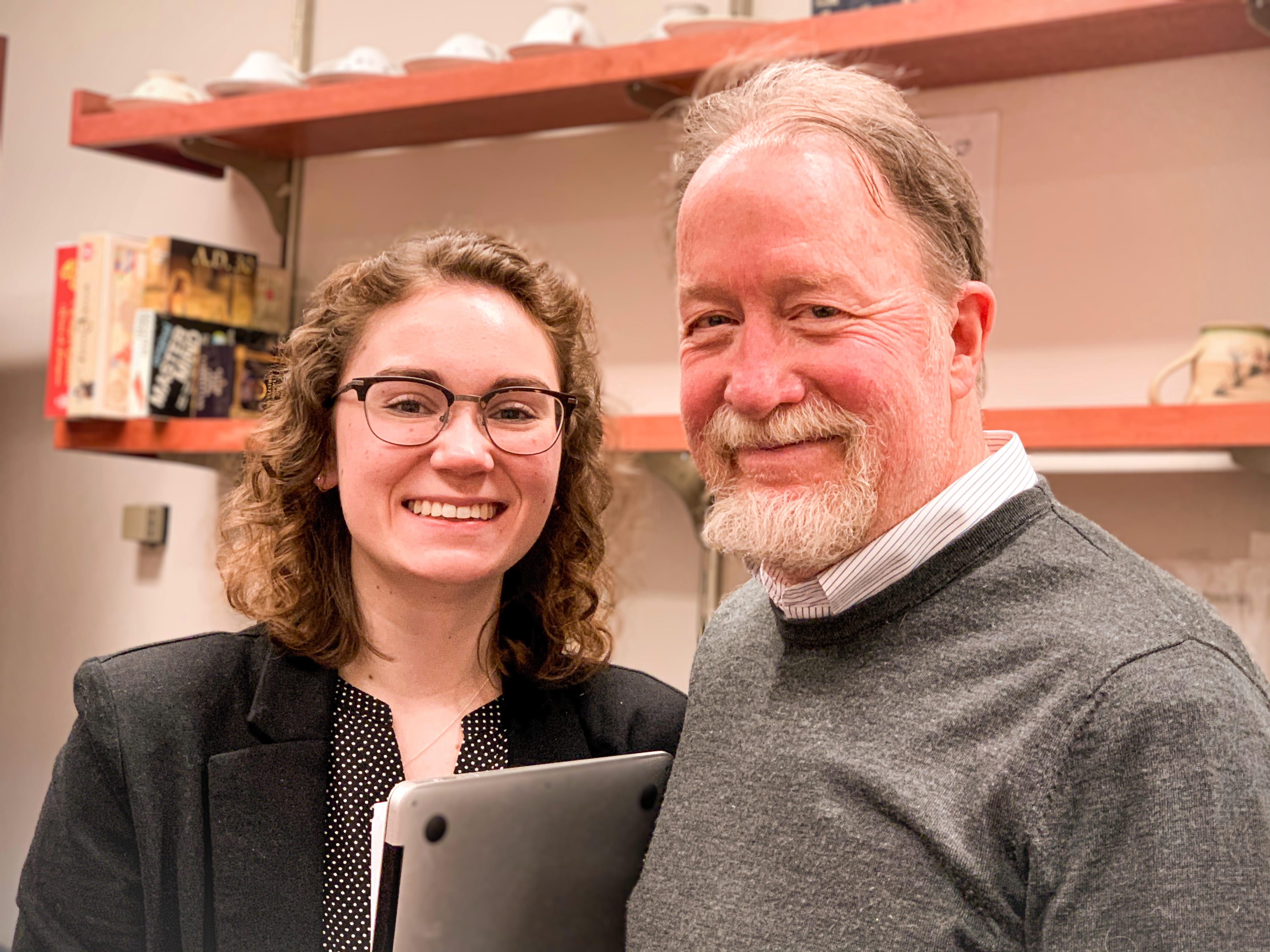
I wouldn’t have made that decision without that anxious conversation with my prospective Religious Studies advisor, who is now among my greatest mentors and conversation partners. I seek out his advice about all sorts of qualms in my life - not because his path closely aligns with mine, but because I respect and look up to his thoughtfulness and wisdom. He saw not only my potential, but also my willingness to learn and grow - and he took me under his wing. And for that, I will be forever grateful.
Who in your life has been a thoughtful mentor? Who has been a conversation partner and listening ear as you consider your life path and vocation? Who has encouraged you to change and grow for the better? Do they know you feel this way about them?
Until next time, friends.